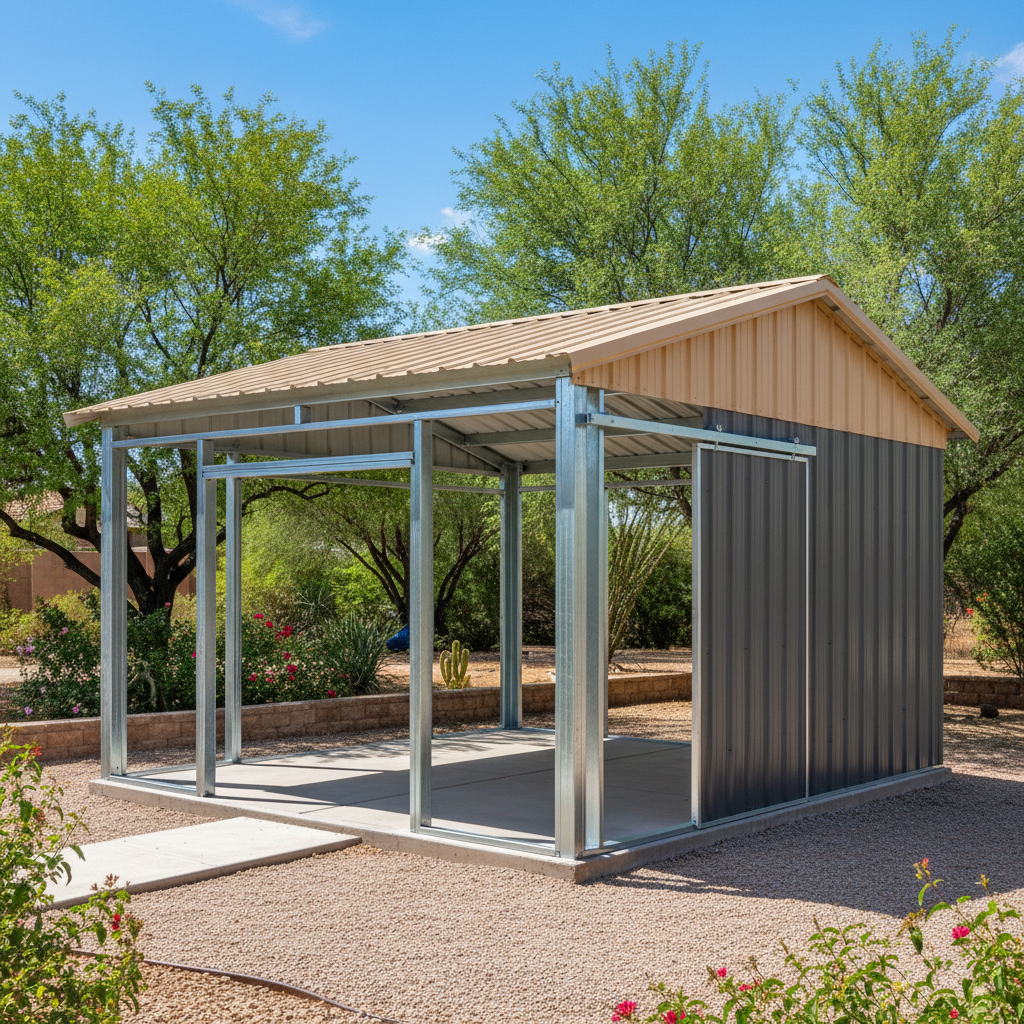
So, you're thinking about putting up a metal shed on your place here in Coolidge. Maybe it's for your tools, or maybe you just need more storage. Or hey, perhaps you're finally getting that workshop you've always dreamed of. Smart move, I say! A good metal shed really stands up to our Arizona sun and those monsoon winds like nothing else. But, having seen my share of projects go south, I know there are some common blunders folks make. Let's chat about how to dodge them.
Skimping on the Foundation
This is probably the biggest mistake I see, and honestly, it's a real head-scratcher. People will shell out good money for a quality metal shed kit or even a custom build, then try to pinch pennies by slapping it onto a crummy foundation. Out here in Coolidge, we've got expansive clay soils in plenty of spots. You just can't toss down a few pavers and call it done, especially for anything bigger than a tiny garden locker. If your foundation isn't perfectly level and prepped right, you're in for trouble. Doors won't shut properly, panels will start to warp, and in a few years, you'll be staring at cracks and structural issues. A solid concrete slab, poured correctly with rebar, is absolutely worth every dime. Don't let anyone tell you differently for a permanent structure. Now, if you're going with a gravel or dirt base for a smaller, lighter shed, make sure it's compacted like crazy and graded for good drainage. Water sitting under your shed? That's just asking for problems.
Ignoring Local Permits and Zoning
I get it, I get it. Permits are a drag. But trust me on this one: dealing with the city or county *after* you've built something is a much bigger headache. Every town, including ours here in Coolidge, has its own rules about setbacks, how tall things can be, and even what percentage of your lot can have structures on it. Some neighborhoods might even have HOA rules on top of all that. Before you even buy one bolt, pop into the Coolidge Planning Department or check out their website. Figure out what's required. Do you need a building permit? Will your shed be too close to your property line? Is there an easement you didn't even know existed? Getting caught building without a permit can mean fines, having to tear it down, or jumping through hoops to get it approved later. It's just not worth the risk. A good contractor will always bring this up, but ultimately, it's your responsibility as the homeowner.
Underestimating Your Size Needs (or Overestimating)
It's kind of like renting a storage unit. You think a 10x10 will do, then two years later, you're practically bursting at the seams. Or, you get this massive 20x30 shed, and half of it's just empty, taking up valuable yard space you could have used for something else. Seriously, take a good look at everything you need to store. Think about what you might need in the future, too. Are you getting a new RV soon? Do you plan to pick up a hobby that needs more room? Measure your biggest items – your lawnmower, your ATV, your workbench. Then, add about 20-30% more space than you think you'll need. That extra bit allows for comfortable movement and future expansion. On the flip side, don't build bigger than you need just because you can. A bigger shed means more materials, a bigger foundation, more upkeep, and a larger footprint on your property. Be realistic about what you actually need, both now and over the next five to ten years.
Choosing the Wrong Metal Gauge or Finish
Not all metal is created equal, especially when we're talking sheds. You'll hear terms like 29-gauge, 26-gauge, 24-gauge. Remember, the lower the number, the thicker and tougher the steel. For a basic, small utility shed that just holds a few garden tools, 29-gauge might be fine. But for anything substantial, particularly out here with our intense summer storms and dust devils, you really want at least 26-gauge, maybe even 24-gauge. Thicker metal means it's more resistant to dents, handles wind better, and will last longer. Then there's the finish. You need a good quality paint system, something like a baked-on enamel or Kynar finish, specifically designed to stand up to UV radiation. Our Arizona sun is brutal, and a cheap paint job will fade, chalk, and look awful in just a few years. It's worth putting money into a quality finish that will keep your shed looking good and protected for decades. We always go over this stuff at Coolidge Metal Buildings because it truly makes a difference down the road.
Not Considering Ventilation
This is a huge one for our climate, don't you think? A metal shed, especially a dark-colored one, can turn into an oven in the summer if it doesn't have proper ventilation. We're talking 150+ degrees inside. That's no good for anything – paint, chemicals, even some tools. You absolutely need good airflow. Ridge vents, gable vents, or even a small exhaust fan can make a world of difference. If you plan on spending any time in there, like for a workshop, you'll definitely want to think about insulation and maybe even a small AC unit. But at the very least, get some good cross-ventilation going. It'll protect your stored items and make the shed much more usable during our long, hot seasons.
So, there you have it. These aren't super complicated things, but people often miss them. Do your homework, ask the right questions, and don't cut corners where it really matters. You'll end up with a shed that works great for you for years and years.