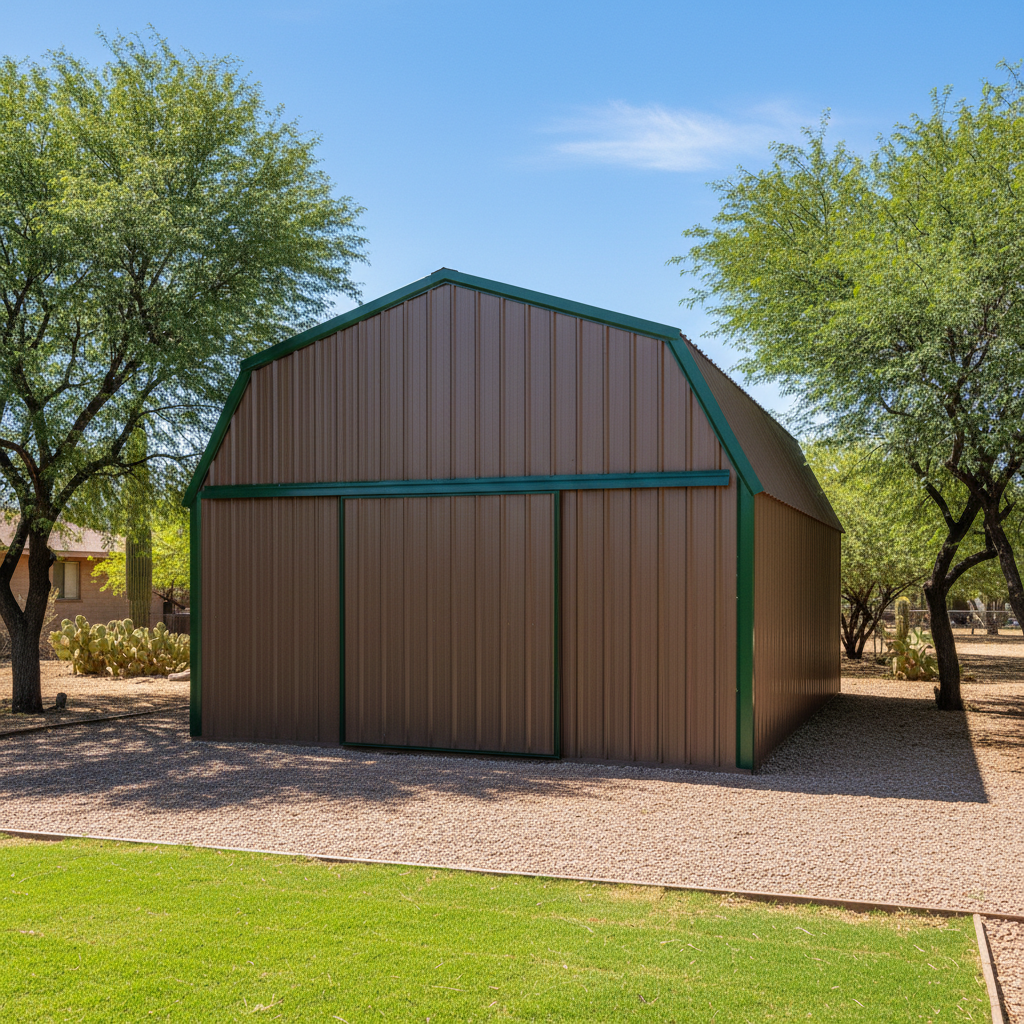
Alright, let's talk brass tacks about pole barn costs right here in Coolidge. You're looking at a metal building, and you want to know what it's gonna set you back. You probably don't want a bunch of fluff either, do you? I get it. I've been building these things for years, and I've seen folks get sticker shock. Or, worse, they get taken for a ride because they didn't really understand what drives the price.
What Actually Changes the Price Tag on Pole Barns?
When you're getting a quote for a pole barn, a few big factors will really swing that number up or down. It's not just a flat rate per square foot, no matter what some online calculators might tell you.
- Size, obviously. A 24x36 foot pole barn for a couple of vehicles and some storage? That's going to be a lot less than a 40x60 foot workshop or a massive agricultural building. Bigger means more materials, more labor, and more time on site.
- Building Height. People often forget about this one. A standard 10-foot eave height is pretty common, but if you need 14 or 16 feet to clear an RV, a tractor, or install a lift, that adds significant cost. Taller walls mean longer posts, more steel, and often more complex construction.
- Foundation Type. Most pole barns use concrete piers for the posts, but you'll almost always want a concrete slab floor. The thickness of that slab (4-inch versus 6-inch), whether it's reinforced with rebar or mesh, and if you need any special footings for heavy equipment — all of that impacts the concrete cost. And trust me, with our expansive clay soils around Coolidge, you absolutely don't want to skimp on a good foundation.
- Doors and Windows. Every opening adds cost. A basic 10x10 roll-up door might run you $1,500-$2,500 installed. But a heavy-duty, insulated 14x14 door for an RV could easily be $4,000-$6,000. Walk-through doors, windows, and their quality all add up pretty quickly.
- Insulation. You're in Arizona. You're going to want insulation unless it's just a shade structure. R-value matters, big time. Basic vapor barrier insulation is cheaper, sure, but if you're heating or cooling the space, you'll want something like R-19 or even R-30. That costs more upfront, but it saves you money on utilities down the road.
- Site Prep. This is a big one that can really sneak up on you. Is your land already level? Do we need to bring in fill dirt, clear brush, or cut into a slope? Extensive grading, tree removal, or dealing with rocky ground can add thousands to the overall project before we even start digging.
- Local Permits and Engineering. Pinal County has its requirements, and getting plans engineered and permits approved is just part of the process. This isn't a huge line item compared to materials, but it's a necessary cost you can't avoid.
So, What's the Typical Range You're Looking At?
Okay, I know you want numbers. For a fully enclosed, insulated metal pole barn with a concrete slab and a couple of doors, here's a ballpark for what I'm seeing for material and installation costs in Coolidge, AZ. Remember, these are rough estimates and can vary based on all those factors I just mentioned.
- Small Utility/Storage (24x36 ft, 10ft eaves): You're likely looking at $25,000 - $40,000. This might get you one roll-up door, one walk-through door, and basic insulation.
- Mid-Size Workshop/Garage (30x40 ft, 12ft eaves): Expect to be in the $40,000 - $65,000 range. This could include two roll-up doors, a walk-through, better insulation, and a slightly thicker slab.
- Larger Multi-Purpose (40x60 ft, 14ft eaves): For something this size, with multiple large doors, good insulation, and a robust concrete slab, you're probably in the $70,000 - $110,000+ territory.
These figures generally include the building kit, delivery, concrete work, and erection by a professional crew. They don't typically include things like electrical, plumbing, or interior finishes unless you specifically ask for them.
What Should a Good Quote Include?
When you get a quote from Coolidge Metal Buildings — or anyone else, for that matter — make sure it's detailed. You want to see:
- Clear dimensions: Length, width, eave height.
- Building materials: Gauge of steel for panels, type of framing, fasteners.
- Foundation specs: Slab thickness, reinforcement, pier details.
- Doors and windows: Sizes, types (roll-up, overhead, walk-through), insulation values.
- Insulation: Type and R-value for walls and roof.
- Site preparation: What's included (grading, excavation) and what's not.
- Permit and engineering costs: Clearly stated.
- Labor for erection: What's covered.
- Warranty information: On materials and workmanship.
- Payment schedule: How and when payments are due.
Don't just take a number on a napkin. You really need to know exactly what you're paying for.
How to Avoid Overpaying for Your Pole Barn
Here are my best tips for not getting ripped off:
- Get Multiple Quotes: This is a no-brainer, right? But make sure you're comparing apples to apples. If one quote is significantly lower, find out why. They might be cutting corners on materials or labor.
- Be Specific About Your Needs: The more detailed you are upfront, the more accurate your quote will be. Try not to change your mind halfway through the project, if you can help it, because that's where change orders and extra costs really pile up.
- Understand the Contract: Read every single line. Ask questions about anything you don't understand. What's excluded? What's an allowance?
- Check References and Licenses: Make sure your contractor is reputable, licensed, and insured. You certainly don't want a fly-by-night operation disappearing with your deposit.
- Don't Automatically Go for the Cheapest: Quality materials and experienced crews cost money. A slightly higher upfront cost for a well-built structure will save you headaches and money in the long run.
- Consider the Long-Term: Think about future use. Adding a door or more insulation later is always more expensive than doing it during the initial build.
Building a pole barn is a big investment, but it's one that can add a ton of value and utility to your property. Do your homework, ask the right questions, and work with someone you trust. You'll end up with a solid structure that serves you well for decades.